Weekly Notes: legal news from ICLR, 24 November 2025
This latest roundup includes immigration, crime, family law, investigatory powers, defamation, and the rule of law. Plus recent case law and commentary.
… Continue reading about Weekly Notes: legal news from ICLR, 24 November 2025
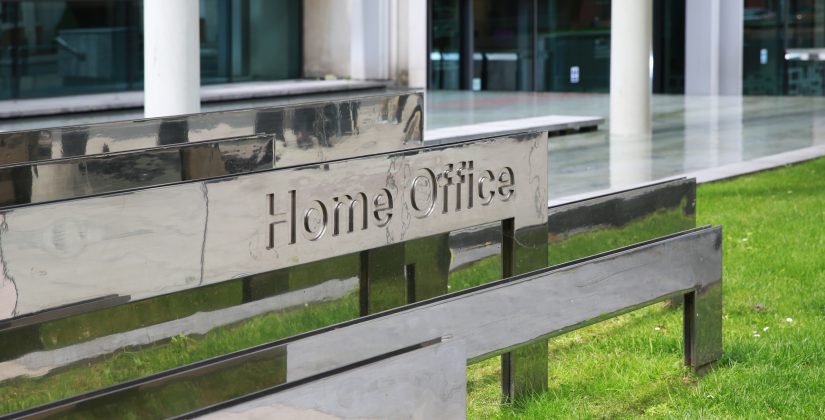
New hurdles for settlers — The Home Office (photo via Shutterstock)
Recent legal news
Crime
The Home Secretary, Shabana Mahmood MP, has ordered a review of public order and hate crime legislation, apparently prompted by the terrorist attack on a Synagogue in Manchester on 2 October, and wider concerns around community tensions and the impact of disruptive and intimidating protests and hate crime on the cohesion and safety of society.
The review, which will be conducted by former DPP Lord Macdonald of River Glaven KC, will look at the powers police have to manage protests and the current hate crime laws, including offences for aggravated behaviour and “stirring up” hatred. It will examine whether existing legislation is effective and proportionate, and whether it protects communities from hate and intimidation while still permitting free speech and peaceful protest. The review follows recent changes to the Crime and Policing Bill, which will require police to consider the overall impact of protests in one place before setting conditions on future demonstrations.
Immigration
As Home Secretary, Mahmood has also set out comprehensive proposals to change the immigration law of the UK, in particular to impose limitations on legal settlement, in what is seen as a bid to reduce the “pull” factor currently encouraging high levels of illegal migration. She made an oral statement to Parliament, A fairer pathway to settlement (20 November 2025) in which she said “the pace and scale of migration in this country has been destabilising”.
Settlement is a privilege, she said, which should be earned, yet at present indefinite leave to remain “comes almost automatically, after 5 years’ residence in this country”. Change was already on its way, as outlined in a white paper, Restoring control over the immigration system published earlier this year. The minimum period for settlement would now be at least 10 years.
The proposals are subject to a consultation: A Fairer Pathway to Settlement: statement and accompanying consultation on earned settlement (20 November 2025).
The main changes are explained in a piece from the BBC, Key takeaways: What are the proposed asylum system reforms? and the BBC noted that Some migrants to face 20 year wait for settled status. See also:
- Free Movement: Home Secretary announces major asylum and other changes in new policy paper: “Restoring Order and Control”
- The Refugee Council: Five critical concerns about the new asylum plans
- Right to remain: Breaking Down the Government’s New Asylum Proposals
Family law
An independent Child Safeguarding Practice Review into the death of Sara Sharif has identified numerous failings by various agencies dating back to 2010. Sara was murdered by her father and step mother in August 2023. The review said there were several points during Sara’s life where different actions should have been taken by Surrey County Council and other agencies to protect her. The picture emerging from the review is bleak:
“Sara was a victim of domestic abuse from birth onwards. As Sara’s parents struggled to care for their children the local authority and the family justice system became involved, but they were unable to find a permanent solution that kept Sara safe. By the age of six Sara was living with her father and stepmother, an arrangement that ultimately led to her death.”
Though ultimate responsibility for her death must lie with the convicted father and stepmother,
“There are clearly several points in Sara’s life, in particular during the last few months, where different actions could and should have been taken and the system failed to keep her safe.”
See also:
- BBC, Lack of trust and racism concerns: Five key failings in Sara Sharif review
- Community Care: Sara Sharif murder: safeguarding failures over many years laid basis for severe abuse, review finds
- Transparency Project: Sara Sharif -what we now know from the Safeguarding Review
Investigatory powers
In a speech given at University College London on 19 November 2025, The Investigatory Powers Tribunal: Reflections on Seven Years as its President, Lord Justice Singh, having just stepped down as its president, discusses the structure, governance and working methods of the IPT.
“When I was appointed in 2018 I was not sure exactly what to expect but it has turned out to be one of the most interesting and fulfilling things I have ever done.” He makes the point that its jurisdiction is wider than might be expected: “the issues which can arise go well beyond the traditional areas of covert surveillance or the conduct of the intelligence services”.
That said, he says the vast majority of cases are dismissed as being, in the language of the Regulation of Investigatory Powers Act 2000, “frivolous or vexatious”.
While much of what goes on, because it concerns national security, cannot be conducted in an open and transparent way like most other courts, it does hold some open hearings — and Singh LJ claims to have done so more often than under his predecessors.
“As recently as 2011 there were no Open hearings held in that year. The number of Open hearings remained below five per annum for the next couple of years but had increased to 15 or so by 2015. During the period that I was President from 2018 the number of cases which have required an Open hearing has increased significantly. This no doubt reflects the increasing complexity of a relatively small number of cases received by the Tribunal (in terms of its overall caseload) but which raise important issues, often affecting the general public interest and not only the interests of the particular parties.”
He goes on to say the Tribunal will provide remote access to Open hearings, where it is available in the relevant courtroom. The tribunal also issues regular reports, setting out statistical data and highlighting the most important legal developments. “In this way it is hoped that the Tribunal can be as transparent as possible given the context in which it operates.”
The rule of law
In a recent blog post, Accessing Injustice, Prof Richard Moorhead asks: “Innocent until proven guilty is supposed to be the golden thread that runs through the criminal justice system. Does it?” The post includes an executive summary of a working paper from The Post Office Project, Accessing Injustice? Experiences of representation and the criminal justice system during the Post Office Scandal.
Moorhead also comments on the House of Lords Constitution Committee’s new report on the rule of law, which he said revealed an issue that had frequently emerged during the Post Office Inquiry, as to there being “one law for us and another for them”. It emphasises, he says, “the need for law-breakers, particularly more powerful law-breakers, to be held accountable”.
The report itself is here: The rule of law: holding the line against tyranny and anarchy (HL Paper 211) (20 November 2025).
Prof Mark Elliott also comments on the report, via the Public Law for Everyone blog: Tyranny, anarchy and the rule of law: Reflections on a major report by the Constitution Committee. He says the report provides an “invaluable analysis of the rule of law in the UK today”, but notes that:
“the report’s focus on successive governments’ acts of constitutional negligence and recklessness that present challenges for the rule of law obscures a deeper, more existential question: namely, whether the UK constitution could withstand the sort of systemic constitutional vandalism that other democracies are experiencing today at the hands of populist and authoritarian regimes.”
Defamation
In two posts on the UK Human Rights Blog, barrister Rosalind English discusses AI liability in defamation Part 1: The US picture and AI liability in defamation Part II: The UK.
“Whatever the outcome of Trump v the BBC, the question that is occupying libel lawyers in the US at the moment is not a human run journalistic enterprise, whatever its flaws. It is the collision between antiquated libel laws the world over and the runaway publication machine called Artificial Intelligence.
No UK court has yet issued a judgment in a libel or defamation claim concerning AI-generated content, but several cases and legal actions are emerging and the issue is widely anticipated to reach the courts soon.”
In regard to the much trumpeted but as yet unfiled claim against the BBC, there has been comment on how the publicly funded national broadcaster should respond, including:
Joshua Rozenberg, A Lawyer Writes:
- BBC apologises to Trump (But it says there is no basis for a defamation claim)
- Will Trump sue?
Several posts from David Allen Green, Law and Policy Blog:
- A close look at Trump’s $1 billion claim against the BBC
- The letter the BBC could send to Trump in reply to his $1bn claim
- Why the BBC is right not to pay damages to Trump
- Trump v the BBC cont’d: an odd and desperate letter from the US media regulator
The position is complicated by the fact that Trump uses litigation as a weapon rather than a remedy, and the BBC often responds to what are perceived as existential attacks by overcompensating, like a panicky driver skidding on a wet road.
Recent case summaries from ICLR
A selection of recently published WLR Daily case summaries from ICLR.4
CONSUMER PROTECTION — Package travel contracts — Traveller: MS Amlin Insurance SE v (W)onderweg VZW, 13 Nov 2025 (Case C-445/24); EU:C:2025:893; [2025] WLR(D) 578, ECJ
CONTEMPT OF COURT — Contempt application — Application to amend: FW Aviation (Holdings) 1 Ltd v VietJet Aviation JSC, 14 Nov 2025 [2025] EWCA Civ 1458; [2025] WLR(D) 577, CA
CONTRACT — Breach — Debt: King Crude Carriers SA v Ridgebury November LLC, 12 Nov 2025 [2025] UKSC 39; [2025] WLR(D) 570, SC(E)
COPYRIGHT — Infringement — Computer software:JJH Enterprises Ltd (trading as Valuelicensing) v Microsoft Corpn, 12 Nov 2025 [2025] CAT 75; [2025] WLR(D) 582, CAT
EMPLOYMENT — Protected disclosure — Act by co-worker: Wicked Vision Ltd v Rice, 14 Nov 2025 [2025] EWCA Civ 1466; [2025] WLR(D) 572, CA
HUMAN RIGHTS — Thought, conscience and religion — Education: In re JR87, 19 Nov 2025 [2025] UKSC 40; [2025] WLR(D) 580, SC(E)
IMMIGRATION — Licensed sponsor — Revocation of licence: R (Prestige Social Care Services Ltd) v Secretary of State for the Home Department, 11 Nov 2025 [2025] EWHC 2860 (Admin); [2025] WLR(D) 584, KBD
IMMIGRATION — Limited leave to remain — Documentary proof: R (Refugee and Migrant Forum of Essex) v Secretary of State for the Home Department (R (Adjei) v Secretary of State for the Home Department), 19 Nov 2025 [2025] EWCA Civ 1843; [2025] WLR(D) 579, CA
POLICE — Police and Crime Commissioner — Power to appoint, suspend and remove chief constable: R (Chief Police Officers’ Staff Association) v Police, Fire and Rescue and Crime Commissioner for Staffordshire, 19 Nov 2025 [2025] EWHC 3047 (Admin); [2025] WLR(D) 583, KBD
SOCIAL SECURITY — Contributory benefit — Bereavement support payment — JUDICIAL PRECEDENT — Decision of Court of Appeal in Northern Ireland — How far binding: R (Jwanczuk) v Secretary of State for Work and Pensions, 20 Nov 2025 [2025] UKSC 42; [2025] WLR(D) 581, SC(E)
Recent case comments on ICLR
Expert commentary from firms, chambers and legal bloggers recently indexed on ICLR.4 includes:
Panopticon: Cumulative Public Interest Exemptions in the Supreme Court: Department for Business and Trade (formerly the Department for International Trade) v Information Comr [2025] UKSC 27; [2025] 1 WLR 3456; [2025] WLR(D) 407, SC(E)
Local Government Lawyer: Judge criticises police force over “unjustifiable” redactions in child proceedings case: Warwickshire County Council v BN [2025] EWHC 2080 (Fam), Fam D
Nearly Legal: Wrong company: Global 100 Ltd v Ross [2025] UKUT 264 (LC), UT
Transparency Project: Judgment given and published in Welsh: TIRE (by her Litigation Friend LK) v Carmarthenshire County Council [2024] EWCOP 81 (T2), Ct of Protection
UK Human Rights Blog: Physician and Anaesthesia Associates: Delegation, Informed Consent, and Montgomery in the Administrative Court: R (Anaesthetists United Ltd) v General Medical Council [2025] EWHC 2270 (Admin), KBD
QMLR: Fundamental Dishonesty and the Role of Experts: O’Connell v Ministry of Defence [2025] EWHC 2301 (KB), KBD
UK Human Rights Blog: Hora v the United Kingdom: Strasbourg’s New Ruling on UK’s Prisoner Voting Ban: Hora v United Kingdom (Application no. 1048/20), ECtHR
Law & Religion UK: Conscientious objection again: Rutkauskas v Lithuania (Application no. 15816/20), ECtHR
Nearly Legal: Unsuitability and a mandatory order: R (Hammad) v Kensington and Chelsea Royal London Borough Council [2025] EWHC 2425 (Admin), KBD
Free Movement: Tribunal lacked jurisdiction to consider human rights appeal where no notice filed: Secretary of State for the Home Department v Da Silva Pinho [2025] UKUT 317 (IAC); [2025] WLR(D) 500, UT
Nearly Legal: Actually, there needn’t (necessarily) be consequences: Beacon Cymru Group Ltd (formerly Coastal Housing Group Ltd) v Mitchell [2025] EWHC 2477 (Ch); [2025] WLR(D) 498, DC
ICLR Blog: End of the line? The Epping asylum hotel planning trial: Epping Forest District Council v Somani Hotels Ltd [2025] EWHC 2937 (KB), KBD
Law & Religion UK: “Strong evangelical Christian beliefs” and the capacity to foster children: Smith & Anor v Manchester City Council [2025] EWHC 2987 (KB), KBD
Law & Religion UK: Religious Education in Northern Ireland: the Supreme Court decision and its impact: In re JR87[2025] UKSC 40; [2025] WLR(D) 580, SC(E)
UK Human Rights Blog: Faith, Freedom, and Fairness: Supreme Court Rules Christian-Only Religious Education in Northern Ireland Schools Unlawful: In re JR87 [2025] UKSC 40; [2025] WLR(D) 580, SC(E)
A Lawyer Writes: Inhuman treatment: Abu v Secretary of State for Justice [2025] EWHC 3026 (Admin), KBD
And finally…
Lord Lindley’s birthday
The 29 November is Lord Lindley’s birthday. Who, you may ask, is Lord Lindley?
Nathaniel Lindley was a 19th century barrister and judge who went on to become Master of the Rolls, but most importantly for us he was one of the architects of the Council of Law Reporting that subsequently became ICLR. His Paper on Legal Reports (1863) set out the criteria according to which cases have been selected (or rejected) for inclusion in The Law Reports since our foundation in 1865. (For more on this, see The ICLR guide to reportability).
We’ll be publishing more about Lindley’s life and work to mark this important date in our calendar.
That’s it for this week. Thanks for reading, and make sure you’re signed up for our email alerts. You can also follow us on BlueSky and LinkedIn
This post was written by Paul Magrath, Head of Product Development and Online Content. It does not necessarily represent the opinions of ICLR as an organisation.